Aortic dissection: a posterior-anterior view of a 3D volume rendered CT of the aorta in a 72-year-old male who presented with excruciating epigastric pain.
Suspect an aortic dissection in patients with chest pain plus any of the following:
New neurological problems
Anterior spinal artery infarction with loss of motor function and loss of sensation (with preserved position and vibratory senses)
Oculosympathetic paresis, or Horner syndrome, with miosis, ptosis, and anhidrosis
A painful Horner’s is a dissection until proven otherwise
Acute renal infarction (flank pain and hematuria, along with a noncontrast CT of the abdomen and pelvis that is negative for ureterolithiasis)
Acute mesenteric ischemia (sudden onset of severe abdominal pain that is out of proportion to physical examination findings, lactic acidosis)
New murmur of aortic regurgitation (listen here; it is an early diastolic decrescendo murmur, best at left upper sternal border, louder with leaning forward or with increased afterload)
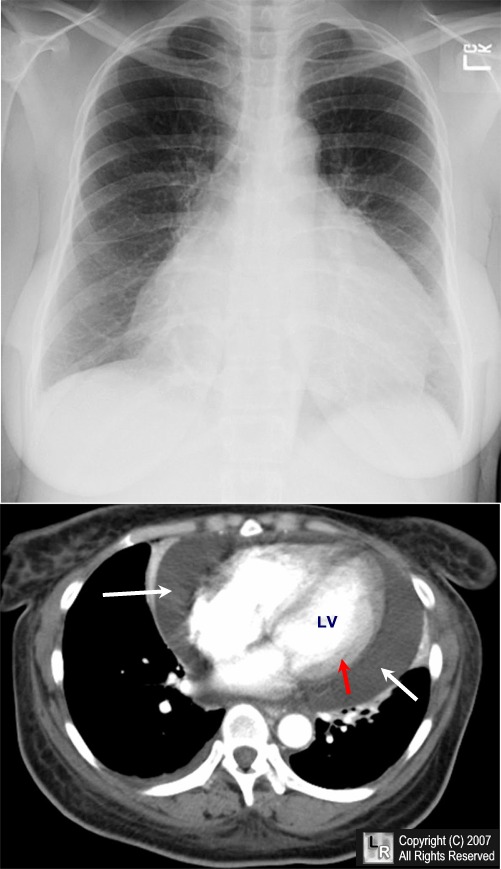
Unexplained pericardial effusion (distant heart sounds, electrical alternans and low voltage on electrocardiogram, chest radiograph with symmetrically enlarged cardiac silhouette)
Evidence of a rare collagen vascular disease (e.g., Marfanoid habitus, hyperextensible joints)
References
UpToDate (accessed 6/14/2013)
Dennis, Mark, MBBS (2012). Mechanisms of Clinical Signs.
9 thoughts on “Aortic Dissection: When to Suspect it”
A nice list- just kind of long to get to the idea that this disease can present as anything.
My quick red flag list (which I hope encompasses some of your points):
Sudden sharp pain
Pain above and below the diaphragm
Any neurologic complaints, including waxing/waning or anatomically unlikely
Migration of pain
I didn’t mention some of what’s in your list initially because I wanted to focus on things that were a bit more external to the description of the chest pain itself. Thank you for adding your red flag list, though. It makes the discussion a bit more complete!
Without a doubt, sharp, tearing, migrating pain that is maximal at onset and radiating to the back points strongly toward aortic dissection.
You should also suspect dissection if chest pain is accompanied by the fact the patient has any familial history of aortic disease. Some twenty percent of ADs are familial in nature.
It’s essential that medical personnel are aware that a dissection can occur at any age. AD is typically associated with men over 50. However, my son was just nineteen years old when he went to a local ER twice over a five day time period complaining of extreme chest pain. Despite my telling the staff of multiple cases of aneurysms and dissections in Tyler’s immediate family, an aneurysm was dismissed because he was “too young”. Unfortunately, he died five days after the second ER visit of a dissection. He did not have Marfan, Ehlers-Danlos, bicuspid aortic valve disease- any of the more recognized precursors to dissection. Tyler had FamilialThoracic Aortic (TAAD) disease. A chest X-ray did not reveal a widened mediastinum, so that’s not a reliable test. The only way to detect an aneurysm or dissection is with a TEE,CT, or MRI.
For more information about thoracic aortic disease, visit http://www.tadcoalition.org
To view an educational video about Tyler and the standards one hospital put in place to better diagnose aortic dissections, visit http://www.bestcare.org/Tyler
Thank you, Ms. McMillan, for sharing your moving personal story with the world.
I am sorry about your tragic loss. Your involvement in the projects you’ve mentioned is an honor to your son’s memory, and I hope that it brings a measure of comfort to you.


A nice list- just kind of long to get to the idea that this disease can present as anything.
My quick red flag list (which I hope encompasses some of your points):
Sudden sharp pain
Pain above and below the diaphragm
Any neurologic complaints, including waxing/waning or anatomically unlikely
Migration of pain
Thank you Dr. Mukherji for your comment.
I didn’t mention some of what’s in your list initially because I wanted to focus on things that were a bit more external to the description of the chest pain itself. Thank you for adding your red flag list, though. It makes the discussion a bit more complete!
Without a doubt, sharp, tearing, migrating pain that is maximal at onset and radiating to the back points strongly toward aortic dissection.
You should also suspect dissection if chest pain is accompanied by the fact the patient has any familial history of aortic disease. Some twenty percent of ADs are familial in nature.
Thank you Ms. McMillan for your comment. It’s a very good point!
Your comment also got me thinking about another possible clue: history of high velocity trauma, such as a motor vehicle crash.
It’s essential that medical personnel are aware that a dissection can occur at any age. AD is typically associated with men over 50. However, my son was just nineteen years old when he went to a local ER twice over a five day time period complaining of extreme chest pain. Despite my telling the staff of multiple cases of aneurysms and dissections in Tyler’s immediate family, an aneurysm was dismissed because he was “too young”. Unfortunately, he died five days after the second ER visit of a dissection. He did not have Marfan, Ehlers-Danlos, bicuspid aortic valve disease- any of the more recognized precursors to dissection. Tyler had FamilialThoracic Aortic (TAAD) disease. A chest X-ray did not reveal a widened mediastinum, so that’s not a reliable test. The only way to detect an aneurysm or dissection is with a TEE,CT, or MRI.
For more information about thoracic aortic disease, visit http://www.tadcoalition.org
To view an educational video about Tyler and the standards one hospital put in place to better diagnose aortic dissections, visit http://www.bestcare.org/Tyler
Thank you, Ms. McMillan, for sharing your moving personal story with the world.
I am sorry about your tragic loss. Your involvement in the projects you’ve mentioned is an honor to your son’s memory, and I hope that it brings a measure of comfort to you.
Thankyou for this information about the condition which took the life of my favourite TV star John Ritter. His wife Amy Yasbeck founded The John Ritter Foundation for Aortic Health and chatted to me about the condition here. http://www.popspeaking.blogspot.com/2013/11/amy-yasbeck-chats-to-us-about-john.html
Hi Gaynor, thank you for your comment. I was aware that a famous TV star died of an aortic dissection, I just didn’t remember the name!
Thanks!